How to Run a Family-Managed Estate Sale Without Overpricing Everything
Managing an estate sale yourself can save money, but pricing everything based on sentimental value or online asking prices can leave you with a house full of unsold items. Learn how to price realistically, organize inventory, attract local buyers, and make a family-run estate sale more successful.
Admin
Published October 8, 2026
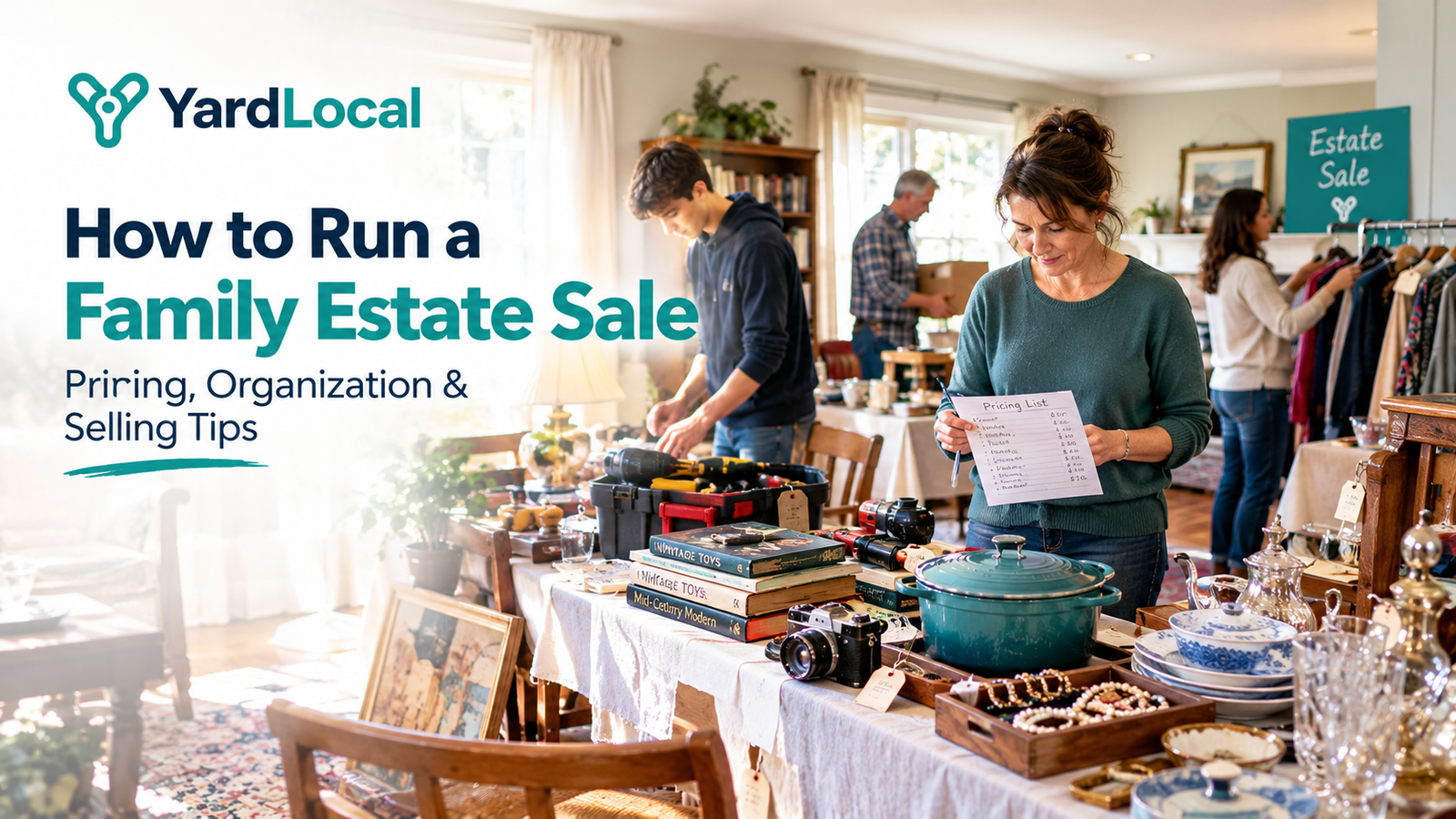
Running an estate sale yourself can save a family the cost of hiring a professional company, but it also creates a difficult challenge: deciding what everything is actually worth.
Family members often know the history behind an item, remember what it originally cost, or believe it should be worth more because it belonged to someone they loved. Buyers, however, are usually looking at the item from a completely different perspective.
A recent discussion among estate sale shoppers highlighted this problem. One shopper described a family-managed sale where many items were organized well and the sellers were friendly, but numerous prices were far above what local buyers were willing to pay. Other shoppers shared similar experiences, particularly when sellers relied on online asking prices instead of actual completed sales. :
If your family is planning to manage an estate sale without a professional liquidator, the goal should not simply be to get the highest possible price for every individual item. The bigger goal is to sell a meaningful amount of inventory, recover reasonable value, and finish with as little left behind as possible.
Is Running Your Own Estate Sale Worth It?
For some families, absolutely. A professional estate sale company can handle pricing, staging, advertising, staffing, checkout, and cleanup, but those services come at a cost.
Managing the sale yourself can make sense when:
- The family has enough time to organize and price everything.
- There are several people available to help during the sale.
- The property is easy for buyers to access.
- You are comfortable negotiating with shoppers.
- You have a realistic plan for unsold items.
The biggest advantage is control. You decide what gets sold, how the sale is promoted, and how the money is handled.
The biggest disadvantage is that the family also has to make decisions that a professional liquidator would normally make, including decisions about pricing items that have significant emotional value.
The Biggest Mistake: Pricing for Sentimental Value
This is one of the hardest parts of managing an estate sale.
A dining table might have been in the family for 40 years. A set of dishes might have been used during every holiday. A tool collection might have belonged to a parent or grandparent who used it every weekend.
Those memories are valuable to the family, but they do not necessarily increase the item's resale value.
Before putting a price tag on something, ask a simple question:
“What would a local buyer reasonably pay for this today?”
That question is usually more useful than asking what the item originally cost or what it means to the family.
Don't Confuse eBay Asking Prices With Actual Value
Online marketplaces can be useful when researching unusual items, but simply finding the same product listed for $200 does not mean your item is worth $200 at a local estate sale.
There is an important difference between an asking price and a completed sale.
An online seller can leave an item listed for months at a price nobody is willing to pay. An estate sale has a completely different objective: the buyer is standing in front of the item, the sale may last only one or two days, and the seller generally wants the property cleared afterward.
When researching valuable or collectible items, look for evidence of what similar items actually sold for rather than relying only on active listings.
Even then, remember that an online sale and a local estate sale are different markets. An eBay buyer may be willing to pay more because the platform gives them access to a much larger pool of buyers and allows the item to be shipped directly to them.
Price Items to Move, Not Just to Impress
One of the biggest mindset changes for a family-run estate sale is understanding that selling an item for $10 today can sometimes be better than holding out for $25 and taking it home afterward.
This does not mean everything should be priced cheaply.
Instead, create different pricing levels based on the type of item.
- Everyday household goods: Price competitively so they move quickly.
- Better brands: Give recognizable brands a premium when condition supports it.
- Collectibles: Research completed sales before setting the price.
- Rare or high-value items: Consider professional appraisal or specialist research.
- Large furniture: Consider local demand, condition, transportation difficulty, and space.
Professional estate liquidators often use standardized pricing systems for common household goods and spend more research time on items that could have significant value. This approach allows them to balance speed with accuracy. :
Don't Spend 30 Minutes Researching a $5 Item
Another common mistake is trying to research every single object individually.
If you have hundreds or thousands of items in a home, spending several minutes researching every coffee mug, paperback book, kitchen utensil, or decorative object can consume days.
Instead, create simple pricing categories.
For example:
- Paperback books: $1-$2
- Common mugs: $1-$3
- Basic kitchen items: $2-$5
- Common clothing: $3-$10
- Better-brand clothing: individually priced
- Tools: individually priced based on brand and condition
- Collectibles: researched individually
The exact prices should reflect your local market, but the principle is simple: use a pricing system for ordinary items and reserve detailed research for things that justify it.
Look for Value Where the Family Might Not Expect It
Families sometimes focus on the obvious expensive items and overlook smaller things.
That can be a mistake.
Clothing, tools, vintage kitchenware, sporting equipment, jewelry, cameras, records, books, collectibles, and hobby-related items can attract buyers even when large furniture does not.
Recent estate sale discussions also highlight how difficult it can be to sell large pieces of furniture, while smaller specialized items can attract collectors and resellers. :
Before throwing anything away, take some time to identify brands, markings, signatures, model numbers, and unusual features.
Something that looks ordinary to one family member may be exactly what another buyer has been searching for.
Organize the House Like a Store
A family estate sale should not feel like buyers are walking through someone's storage room.
Good organization makes it easier for shoppers to find things and can make the entire sale feel more valuable.
Group similar items together:
- Kitchenware in the kitchen
- Tools in the garage or workshop
- Clothing together by type or size
- Books in one area
- Toys and games together
- Collectibles in a clearly marked display
- Furniture arranged so buyers can easily inspect it
Clean tables, clear walkways, readable price tags, and good lighting can make a major difference.
If you have a large inventory, creating a basic catalog before the sale can also help you keep track of valuable items. Professional estate sale operators commonly organize inventory by room or zone, photograph items, and record important details such as brand and condition. :
Take Better Photos of the Best Items
Your listing photos are one of the first things potential buyers see before deciding whether your sale is worth visiting.
Do not photograph every item individually and expect shoppers to sort through hundreds of random images.
Instead, create several strong photos showing the best parts of the sale.
For example, photograph:
- A room filled with vintage furniture
- A well-organized tool collection
- Jewelry and collectibles
- Vintage kitchenware
- Records and audio equipment
- Interesting toys or memorabilia
- High-value individual items
Make sure the photos are bright, focused, and free from unnecessary clutter.
Advertise the Sale Before Opening Day
Even a well-priced sale will struggle if buyers do not know it exists.
List your estate sale online several days before the event whenever possible. Include the dates, opening times, general location, photos, and some of the most interesting items available.
You can post your estate sale on YardLocal and use photos to show buyers what they can expect to find.
Creating an attractive listing is particularly important when your sale contains specialized inventory. Someone who is specifically looking for tools, vintage clothing, records, collectibles, or furniture may be willing to drive farther when they can see that your sale has what they want.
Make Your Pricing Strategy Clear
If you are willing to negotiate, say so.
But avoid creating confusion where every shopper has to ask whether the price is negotiable.
A simple sign such as “Reasonable offers welcome” can make expectations clear.
You can also create a discount plan for the final hours or final day.
For example:
- Day 1: Regular prices
- Day 2: Selected discounts
- Final hours: Aggressive clearance pricing
The exact discount structure depends on how quickly you need to clear the property.
Professional liquidators often use structured discount schedules because the objective is not only to maximize individual item prices but also to move inventory before the sale ends. :
Don't Be Afraid to Negotiate
Negotiation is part of an estate sale.
A shopper might offer $15 for something marked $25. Another buyer might offer $50 for several items together.
Instead of automatically rejecting every offer below the sticker price, consider the bigger picture.
Ask yourself:
- How long has the item been sitting?
- Is there another realistic buyer likely to pay more?
- Would I rather sell it today or deal with it after the sale?
- Is the buyer purchasing multiple items?
- Will keeping it create more work later?
Sometimes accepting a reasonable offer is the better financial decision because it eliminates the cost and effort of dealing with the item later.
Have a Plan for Unsold Items
This is something families should decide before the sale begins.
What happens if half the furniture does not sell?
What happens to the boxes of books, clothing, dishes, decorations, and miscellaneous household goods?
Possible options include:
- Donate suitable items
- Sell valuable leftovers individually
- Arrange a bulk pickup
- Hold a final clearance period
- Use a cleanout service
- Keep selected items with family members
Knowing the end goal can help you price more realistically from the beginning.
When Should You Hire an Estate Sale Company?
Running the sale yourself is not always the best option.
A professional company may make more sense when the property contains a very large amount of inventory, the family lives far away, there are difficult family decisions involved, or the property needs to be cleared quickly.
Professional companies can also provide staffing, staging, pricing systems, marketing, checkout, and post-sale cleanout services. The cost can be significant, but some families consider that worthwhile because it removes hundreds of hours of work and reduces the emotional burden.
The right choice depends on the size of the estate, the value of the inventory, the family's available time, and how quickly the property needs to be cleared.
How to Make a Family-Managed Estate Sale More Successful
If your family decides to handle everything yourselves, focus on five priorities:
- Price for the local market, not sentimental value.
- Use completed sales when researching valuable items.
- Organize the home so shoppers can easily browse.
- Promote the sale online with strong photos.
- Have a clear plan for discounts and unsold items.
You can also review our guide on how professional estate sale liquidators price and catalog items for more ideas on organizing large amounts of inventory.
For additional advice on when shoppers are most likely to find the best selection or discounts, see our guide to the best time to go to an estate sale.
The Goal Is to Successfully Liquidate the Estate
The biggest lesson for families managing their own estate sale is that the highest sticker price does not necessarily produce the highest overall result.
A $200 price tag means nothing if nobody is willing to pay $200.
The real objective is to find the balance between getting fair value and actually moving the inventory.
Some items will sell immediately. Others may require negotiation. A few valuable pieces may deserve separate research or online selling. And some ordinary household items may simply need to be priced low enough to move.
Most importantly, remember that an estate sale is a liquidation event, not a museum appraisal of everything a family owned.
With realistic pricing, good organization, strong photos, and effective local promotion, a family-managed estate sale can turn a difficult cleanout into a much more manageable process.
Ready to Promote Your Estate Sale?
Once your items are organized and your prices are ready, make sure local buyers can find your sale.
List your estate sale on YardLocal and showcase your best items with photos so nearby shoppers can discover your event before they arrive.
You can also browse estate sales on YardLocal to see how other sales are presented to local buyers.
Ready to find yard sale treasures near you?
Search active garage sales, estate sales, and neighborhood events updated daily on YardLocal.