Can You Buy Alcohol at an Estate Sale? What Buyers Should Know
Can you buy alcohol at an estate sale? The answer depends on state and local laws. Learn what buyers should know about alcohol at estate sales, how estate sale companies may handle it, and what organizers should consider before offering alcoholic beverages for sale.
Admin
Published September 29, 2026
Can You Buy Alcohol at an Estate Sale?
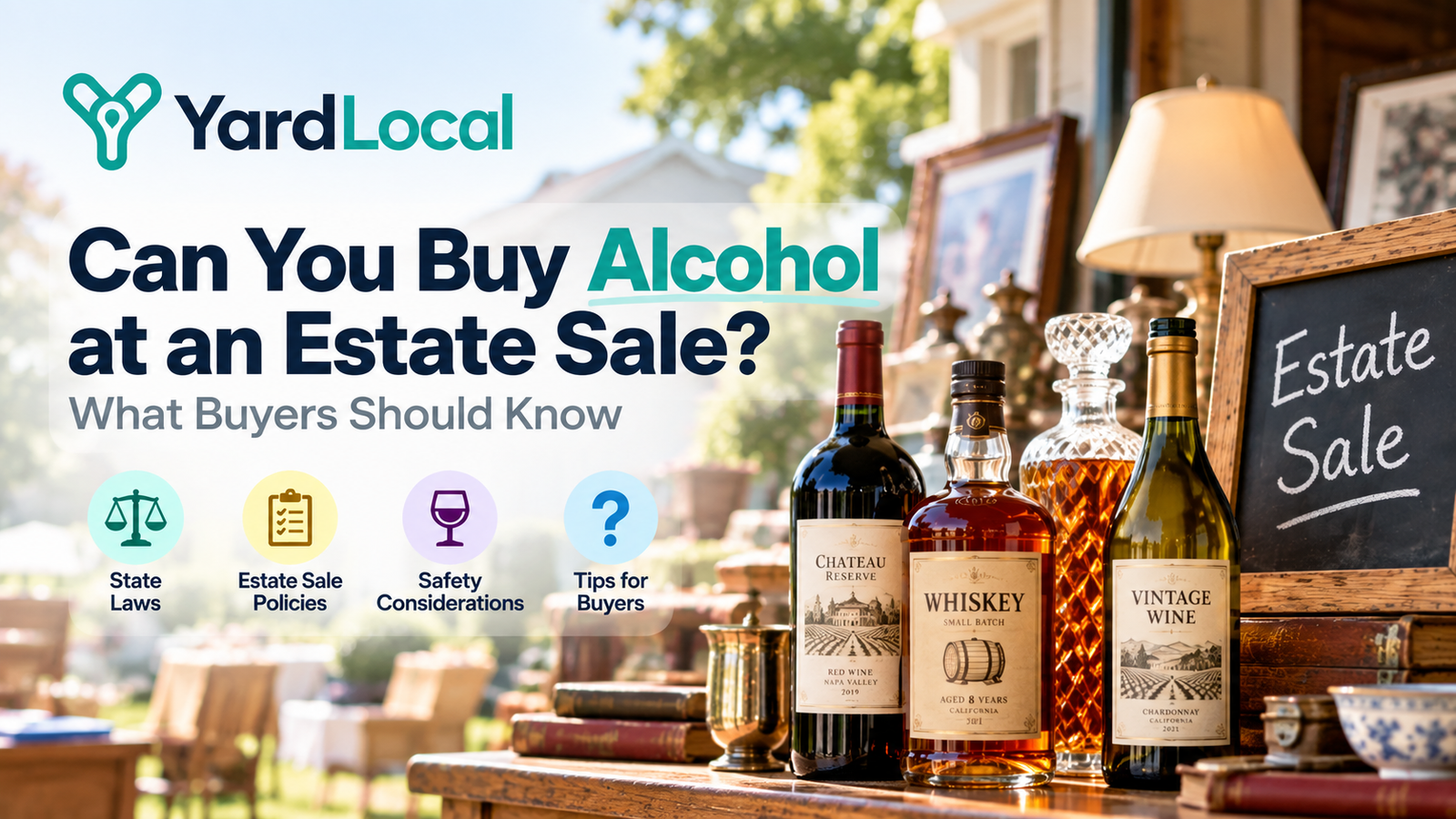
It is not unusual to find bottles of wine, whiskey, spirits, or other alcoholic beverages inside an estate sale. That can leave shoppers wondering a simple question: can you actually buy them?
The answer depends on where the estate sale takes place and how the transaction is handled. Alcohol is regulated differently from ordinary household goods, and state and local rules can apply.
That means seeing a bottle displayed at an estate sale does not necessarily mean the estate sale company is legally allowed to sell it.
Why Is Alcohol at an Estate Sale Complicated?
Most estate sale items are relatively straightforward to price and sell. Furniture, books, kitchenware, tools, and collectibles can generally be treated like ordinary household goods.
Alcohol is different because selling or transferring alcoholic beverages can be subject to specific licensing and regulatory requirements.
Rules can vary significantly between states and even between different types of transactions. For that reason, an estate sale company may have a completely different policy from one operating in another location.
The safest takeaway for shoppers is simple: do not assume that an alcohol bottle displayed at an estate sale is available for purchase.
How Do Estate Sale Companies Handle Alcohol?
There is no single approach used by every estate sale company.
Some companies may refuse to sell alcohol altogether. Others may have specific procedures for handling bottles found in an estate. In some cases, alcohol may simply remain on display as part of the household contents without being offered for sale.
The policies you encounter can therefore vary from one estate sale to another.
If you see alcohol at a sale, ask the estate sale staff before assuming that it is available. They can explain whether the bottles are being sold, excluded from the sale, or handled in another way.
Does Your State Matter?
Yes. The laws governing alcohol sales and transfers can vary considerably by state.
A practice that may be permitted in one location may not be permitted in another. Licensing requirements and restrictions can also depend on how the transaction is structured.
This is particularly important for estate sale companies because they may be selling property on behalf of an estate rather than operating a traditional retail business.
If you are organizing an estate sale, check the requirements that apply in your state and local area before offering alcoholic beverages for sale.
What About a "Gift With Purchase"?
Some shoppers report seeing arrangements where alcohol is described as a gift, donation, or something included with another purchase.
However, simply describing a transaction differently does not automatically make it legal.
Estate sale shoppers should not assume that a "gift with purchase" arrangement is permitted simply because someone has used that approach elsewhere.
If the estate sale company says that alcohol cannot be sold or transferred, the safest approach is to respect that policy.
Can You Buy an Empty or Decorative Bottle?
An empty bottle can be different from a bottle that still contains alcohol.
Collectors may be interested in vintage bottles, unusual labels, old packaging, or decorative containers. In those cases, the value may come from the container itself rather than the contents.
However, buyers should still ask the seller what exactly is being offered and avoid making assumptions about the legal status of any remaining contents.
What About Vintage or Collectible Alcohol?
Estate sales can sometimes contain older bottles that attract collectors. Vintage wine, whiskey, spirits, and unusual packaging may look particularly interesting to someone who collects them.
But the age or rarity of a bottle does not automatically remove the regulations that may apply to alcohol.
If you encounter a potentially valuable bottle, ask the estate sale company how it is being handled before attempting to purchase it.
What Should Buyers Do If They Find Alcohol?
Ask Before Taking the Bottle
Do not automatically put a bottle in your shopping basket. Ask the estate sale staff whether it is available and what their policy is.
Don't Assume an Unpriced Bottle Is for Sale
Estate sales contain many objects that are not available for purchase. An unpriced bottle may simply be part of the household contents.
Follow the Estate Sale Company's Rules
If the company says alcohol is not available for purchase, leave it alone. Estate sale operators have to follow the rules that apply to their business and location.
Check Local Requirements When Necessary
If you are organizing a sale and are unsure about the legality of selling alcohol, contact the appropriate state regulatory agency or a qualified professional for guidance.
What Should Estate Sale Organizers Do?
If you are organizing an estate sale and discover alcohol in the home, don't simply add prices to the bottles and put them on the sales table.
First, determine what your state and local regulations allow. If you work with a professional estate sale company, ask how they normally handle alcohol found during an estate liquidation.
If the bottles cannot legally be sold, keep them separate from merchandise that is available to shoppers and make the policy clear to your staff.
For more estate sale planning advice, read YardLocal's guide on how estate sale liquidators price and catalog items:
How Estate Sale Liquidators Price and Catalog Items
How Can You Find Estate Sales Near You?
If you're interested in estate sales because you enjoy finding unusual items, furniture, collectibles, or household goods, planning ahead can make your shopping trips more productive.
YardLocal helps shoppers discover local yard, garage, and estate sales by location and browse sale information before heading out.
You can also learn more about when to visit an estate sale with this guide:
Best Time to Go to an Estate Sale: First Day vs. Last Day Strategy
What Else Can You Find at an Estate Sale?
One of the best things about estate sales is the variety of items you can encounter.
Depending on the household, you might find furniture, artwork, books, kitchenware, tools, collectibles, clothing, records, electronics, antiques, and other items that are difficult to find elsewhere.
Some shoppers prefer to arrive early for the largest selection, while others visit later in the sale hoping to find discounts.
If you're interested in planning your visit, read:
Best Time to Go to an Estate Sale: First Day vs. Last Day Strategy
How Can Estate Sale Organizers Attract More Shoppers?
Getting the word out is an important part of running a successful estate sale.
Clear photos, accurate dates, useful item descriptions, and good local visibility can help shoppers decide whether a sale is worth visiting.
YardLocal lets sellers create a local sale listing with important information about the event.
You can also learn more about promoting an estate sale with:
The Bottom Line
So, can you buy alcohol at an estate sale?
Sometimes, but you should never assume that you can.
Alcohol sales and transfers are subject to rules that vary by state and situation. Some estate sale companies may refuse to sell alcohol, while others may have procedures for handling it that comply with their local requirements.
The safest approach for buyers is to ask the estate sale company directly and follow its policy. For organizers, check the applicable state and local requirements before offering alcoholic beverages for sale.
If you're looking for your next estate sale, browse current estate sales on YardLocal and plan your next weekend of treasure hunting.
Ready to find yard sale treasures near you?
Search active garage sales, estate sales, and neighborhood events updated daily on YardLocal.